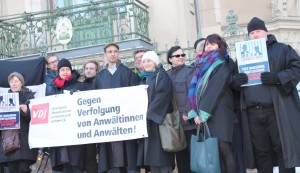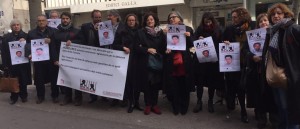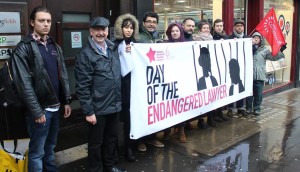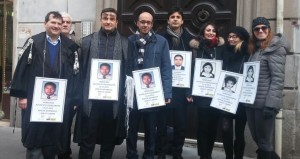


Letters to Turkey

The AED has sent some letters and is now waiting for an answer!

Here is the text of the letter, addressed to the minister of Justice, the President of the Bar association, the ambassador of France in Turkey and the French minister of foreign affairs:

Le 16 mars 2016, à l’aube, neuf avocats turcs ont été interpellés à Istanbul et placés en garde à vue par la police qui a perquisitionné leurs domiciles ou leurs bureaux.

Il s’agit de Ramazan DEMIR, Iffan ARASAN, Ayse ACINIKLI, Hüsein BOGATEKIN, Sefik CELIK, Adem CALISCI, Ayse BASAR, Tamer DOGAN et Mustafa RÜZGAR.

Ces neuf avocats sont tous membres de l’équipe de Défense de 46 autres avocats turcs poursuivis depuis 2012 dans le cadre d’un procès dit KCK2, pour avoir participé à la défense d’un opposant notoire.

Leur interpellation a eu lieu, sans que les motifs en soient connus, la veille de l’audience du procès KCK2 fixée au 17 mars 2016 et à laquelle ils devaient plaider pour leurs confrères.

Leur maintien en garde à vue les a empêchés de remplir leur mission de défense et le procès a dû être renvoyé au 28 juin 2016.

A l’issue du délai de garde à vue et après 13 heures d’interrogatoires et de plaidoiries, ils ont été relâchés le samedi 19 mars, par décision du tribunal mais contre l’avis du Procureur.

Sur appel du Procureur, le 23 mars un autre juge a estimé fondée leur détention provisoire et décerné un mandat d’arrêt contre 4 d’entre eux.

Deux d’entre eux, Hüssein BOGATEKIN et Ayse BASAR ont été immédiatement interpellés et mis en détention.

Ils ont été libérés par la Cour d’Appel le 1er Avril suivant.

Mais le 6 avril, deux autres avocats étaient interpellés et mis en détention : Ramazan DEMIR et Ayse ACINIKLI.

Nous apprenons que leur appel vient d’être rejeté.

Il semble que les principaux griefs invoqués à l’encontre de ces avocats pour justifier ces mesures, soient liés à leur participation à la défense d’opposants notamment de manifestants du parc de GEZI, au dépôt de requêtes auprès de la CEDH, et à la participation à des conférences internationales, ces agissements constituant le dénigrement de l’Etat et la Nation turcs.

Il apparaît donc que ces avocats sont poursuivis, en totale violation des règles et accords internationaux qui régissent la Profession, pour avoir exercé leur mission de défense et leur liberté de parole et qu’ils sont assimilés à leurs clients, ce qui est inacceptable.

Nous vous rappelons que les pouvoirs publics doivent veiller à ce que les avocats ne soient pas assimilés à leurs clients, ou à la cause de leurs clients, du fait de l’exercice de leurs fonctions.

C’est pourquoi nous vous demandons d’intervenir de toute urgence pour que Ramazan DEMIR et Ayse ACINIKLI soient remis immédiatement en liberté et que soit reconnu et protégé, en TURQUIE, le Droit à la Défense pour tous, fondement d’un procès équitable.

Nous vous remercions de votre réponse à notre demande et vous prions d’agréer, Monsieur le Ministre, l’expression de notre respectueuse considération.

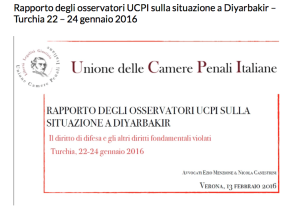
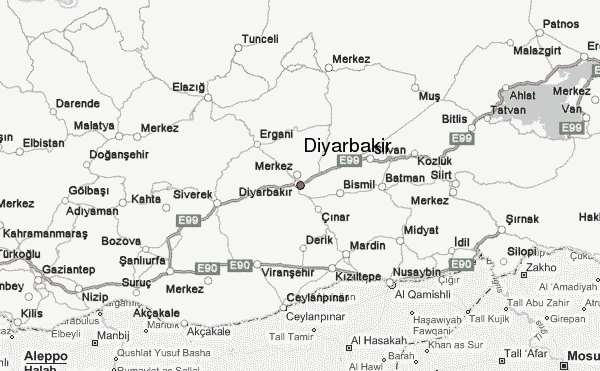
Report: Lawyer’s Delegation to Kurdistan (jan.2016)

From 21 to 24 of January 2016, a delegation of 10 lawyers from Austria, Belgium, Germany and Italy visited Diyarbakır, Turkey. The mission was coordinated by two European lawyers’ organizations—the European Association of Lawyers for Democracy and Human Rights (ELDH) and European Democratic Lawyers (EDL)—and the Unione delle Camere Penali Italiane. It was supported by the ÇHD (Çağdaş Hukukçular Derneği) (Contemporary) Progressive Lawyers Association.

Here is their account of the situation.

The delegation submits that there is strong evidence that the Turkish authorities who order(ed) and implement(ed) the curfews may have committed offences against humanity pursuant to Article 77 of the Turkish Penal Code.


Further, the committed crimes amount to a collective punishment39 against all inhabitants of the areas under curfew and the security zones. Civilians are to be protected under all circumstances.


The delegation concludes that further investigations must be conducted to hold those accountable for the crimes committed.

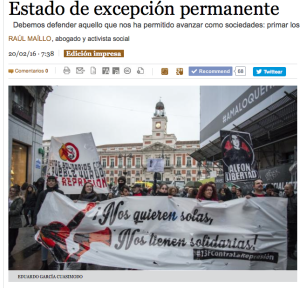
Titiriteros- Puppeteers

The AED fully sustains ALA in its work- it has denounced the Judge Ismael Moreno who ordered the detention of three puppeteers as preventive measure.

titiriteros

Read the news article in Diagonal here

and

titiriteros2

read the opinion of ALA here

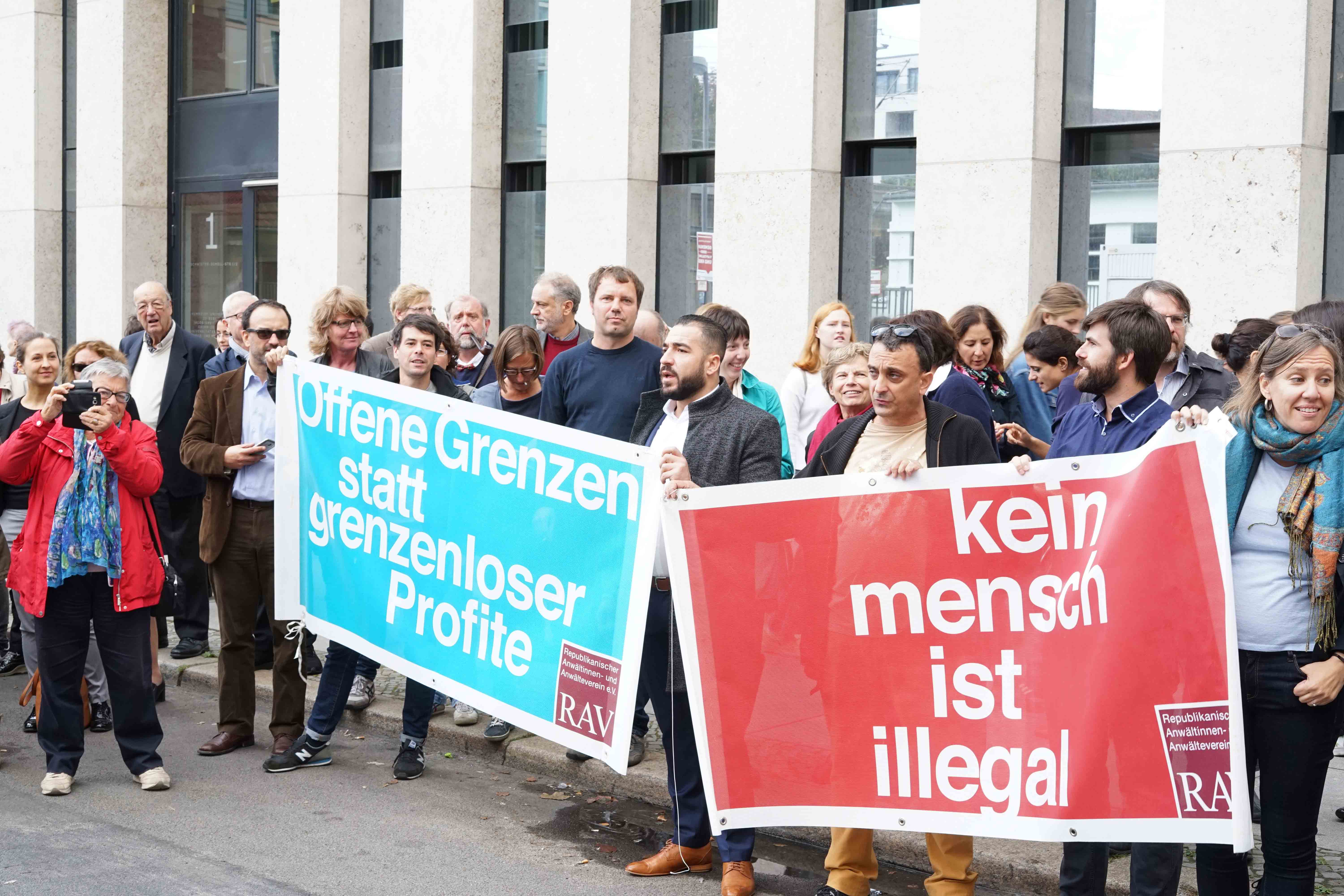
SAF takes position on the state of emergency

The French Syndicat des Avocats de France takes position on the state of emergency and the constitutional reform.


Dans une République où le pouvoir législatif est déjà soumis à l’exécutif, ces mesures sont de nature à transformer profondément notre démocratie en régime arbitraire.

Read more

European Lawyers report Massive Human Rights Violations in Diyarbakir (Turkey)

London/Düsseldorf, 25th January 2016

Press Release:
European Lawyers report Massive Human Rights Violations in Diyarbakir (Turkey) due to curfew –immediate international action needed

A delegation* of 10 lawyers from Austria, Belgium, Germany, and Italy visited Diyarbakir, Turkey, from 21st to 24th of January 2016 to monitor the impact of the curfew on the population. The mission was coordinated by two European lawyers’ organisations, the European Association of Lawyers for Democracy and Human Rights (ELDH) and the European Democratic Lawyers (EDL), and also the “Unione delle Camere Penali Italiane”.

The lawyers had meetings with the bar association, human rights organizations, the chamber of doctors, families of victims, a women’s organization, the co-mayor of the city and the People’s Democratic Party. In the course of these meetings, they received reports about a dramatic situation.

In the Sur district, the ancient centre of Diyarbakir, as well as other cities and districts of the region, curfews are being imposed by the government. In Sur, the 125.000 inhabitants of 6 neighbourhoods are completely isolated by the curfew. Around 22,000 people had left the curfew areas, some of them deliberately, most of them forced by the military. People living in the area subject to curfew are not allowed to leave; exit is allowed only in rare moments when the curfew is lifted and even then subject to the arbitrary decisions of the army officers. People who leave those areas are not sure that they will be allowed to go back to their homes. On the contrary, no one who is not a resident of Sur can enter. This results also in a serious lack of transparency. No one is able to assess the real situation because no international delegation or independent person is allowed to see with his own eyes. Therefore no- one has a chance to collect evidence, participate in an autopsy etc. This makes it easy for the state to claim that; “everyone who had died was a terrorist” or was “killed by terrorists”.

The population is not properly informed about a temporary lifting of the curfew and about the time when it was re-imposed. For this reason in some cases people, among them several school-children, have been shot by military snipers because they were not aware of the restart of the curfew. The curfew in Sur has lasted already for more than 50 days, day and night. The consequence is that the basic needs of citizens of Sur are violated. They have no access to medical care; access to drinking water, food and electricity is limited. In the whole region, an estimated 1.5 million people are directly or indirectly affected by the curfews and the military atrocities.

The inhabitants of Sur are taken hostage by the military, and are subjected to ill-treatment and to extreme violence. The delegation could hear gun-fire day and night, and observed helicopters and fighter jets flying over the city and armoured vehicles patrolling the streets. The rights to education, health and health care and free movement are being violated. Houses are destroyed by the military and water pipes and electricity lines are interrupted and/or destroyed.

The Turkish government boasts to have killed hundreds of fighters. They don’t mention the hundreds of civilians, among them many children, who have been killed and wounded. Wounded people remain on the street because they are prevented from receiving medical treatment and die because of their injuries. Corpses of men, women and children remain on the streets often for many days, because their families are prevented from burying them.

Every morning, fully equipped doctors demand access to the curfew zone but are pushed back by police.

This curfew violates Turkish as well as international law. According to the Turkish constitution and the State of Emergency Law, the prerequisite for the declaration of a curfew is the declaration of a state of emergency. The Council of Ministers did not declare a State of Emergency. International human rights treaties which have been ratified by Turkey are not respected.

The lawyers call upon

  • The Turkish Government to put an immediate end to the unlawful curfew and to respect national and international law and treaties;
  • The European Institutions to do all they can to end this human tragedy. The legally questionable cooperation between the EU and Turkey against the free movement of refugees cannot justify the silence of the European Union towards the crimes, which are being committed right now in Diyarbakir, Cizre and other towns in the region;
  • The United Nations to convene urgently a meeting of the UN Security Council on the deteriorating situation of the civilians under curfew.


For more information, contact

Silke Studzinsky
E-mail: sist@rajus.de

Tel.: +49 (0) 177 5034907

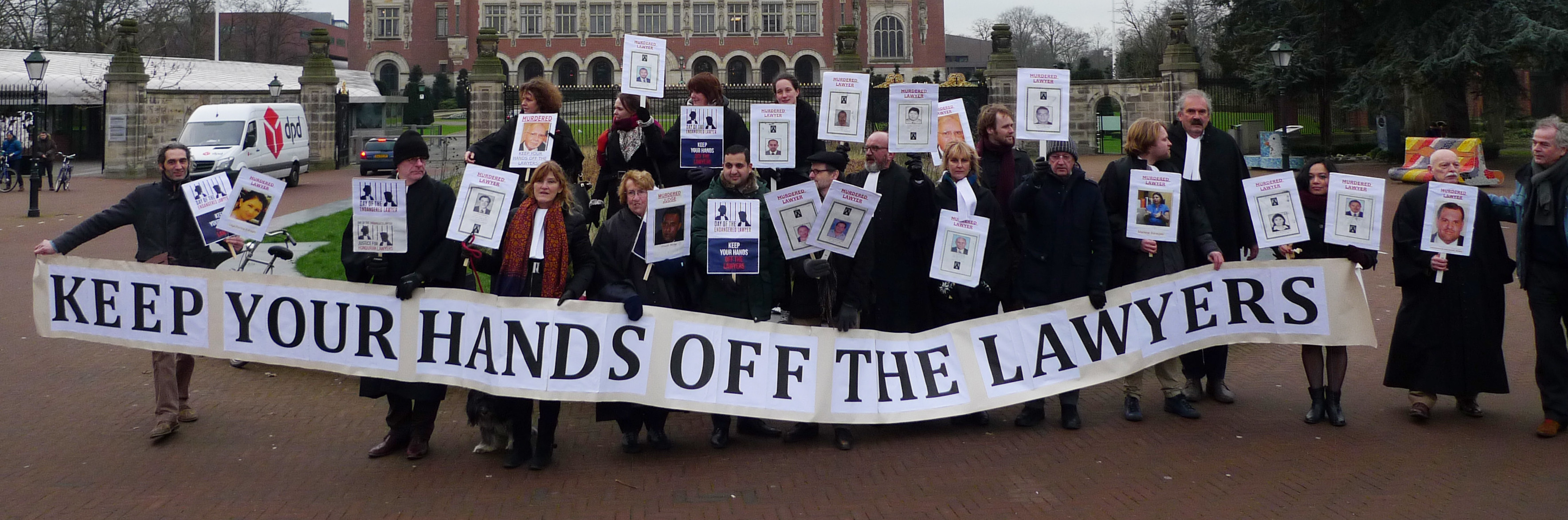
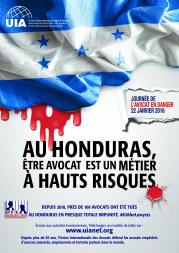
Journée de l’avocat en danger 2016 – Mobilisons-nous en faveur des avocats de Honduras !

Depuis le coup d’état de 2009, les violations graves des droits de l’homme, commises à grande échelle, ont fortement affecté la population du Honduras. L’absence de réaction de l’Etat à la hauteur de la gravité de la situation est largement dénoncée par les organes des Nations-Unies et la Commission interaméricaine des droits de l’homme.

Les avocats ne sont pas épargnés par cette situation. La pratique du droit est en soi génératrice de risque dans un contexte de perte totale de confiance de la population envers l’institution judiciaire et ses différents acteurs.

Le nombre d’avocats enregistrés auprès du barreau national du Honduras s’élève à 18.000.

La Commission nationale des droits de l’homme (CONADEH) a enregistré entre 2010 et mars 2015, 89 cas de mort violente de professionnels du droit (avocats, juges et membres du parquet).

Dans la grande majorité, ces meurtres ont été commis à l’arme à feu et dans au moins 82% des cas, le ou les auteurs de ces crimes restent impunis.

L’absence de mise en place de programmes spécifiques de protection pour les acteurs de justice par les autorités a été régulièrement dénoncée par la Commission interaméricaine des droits de l’homme. Tous réclament de l’Etat autant la mise en place des mesures nécessaires à la protection de leur intégrité physique et morale.

Trop souvent l’avocat est rendu responsable des disfonctionnements de la justice ou même simplement du fait que le juge a tranché en faveur de la partie adverse. Dans un pays où la violence est omniprésente,  la frustration ressentie par les justiciables se règle trop souvent par des attaques, souvent fatales, à l’encontre des avocats ou magistrats.

Un avocat au Honduras doit être formé à la sécurité, pouvoir être sélectif dans les dossiers qu’il accepte et exclure tout dossier potentiellement générateur de danger en raison de la personnalité des parties ou des enjeux présents.

Une telle situation n’est pas conforme à la mission de l’avocat et est dénoncée par tous comme ayant des conséquences graves sur la capacité des professionnels du droit à exercer leurs fonctions de façon indépendante et impartiale.