Read our report on the Philippines
DAY OF THE ENDANGERED LAWYER – 23rd January 2015
PRESS RELEASE
Lawyers under Death Threat in the Philippines
Lawyers all over Europe protest this day in Ankara, Athens, Barcelona, Berlin, Bern, Bilbao, Brussels, Düsseldorf, The Hague, Istanbul, Izmir, London, Madrid, Manila, Milan, Paris, Rome and Vienna. This year the Day of the endangered Lawyer is focussed on lawyers in the Philippines who are murdered and who receive death threats because they defend the rights of the poorest, and who work on cases of human rights violations.
The reported total number of lawyers that have been killed after 2001 is 41, nine (22%) of whom were directly involved in handling human rights cases or issues. On top of this, 57 lawyers have been threatened, harassed, intimidated, surveilled, labelled and attacked in other forms, a sizable 43 (76%) of whom were directly involved in human rights cases or advocacies. In addition, 18 judges have been murdered since 2001. Of the known perpetrators recorded, 65% were identified to be members of the military while 20% were from the police service. More than half, however, of all attacks have no known perpetrator to date.
Among the lawyers who have been killed recently are: Rudolfo Felicio, Noel D. Archival, John Mark Espera, Ian Vela Cruz, Jubian Achas, Sulpicio Landicho, Lazaro Gayo, Christobal Fernandez. (For more details read the Basic Report on the human rights lawyers under continuing threat in the Philippines http://www.eldh.eu/fileadmin/user_upload/ejdm/events/2014/Basic_report_for_the_Day_of_the_Endangered_ Lawyer_2015.pdf
In the past there has been international pressure on the Philippine government to address the issue, to make important steps to prosecute the perpetrators and to stop the situation of impunity. But in the last year the situation has again deteriorated. The documented reports about the killings and attacks on Philippine lawyers and also judges show an increasing number of killings, harassments and other attacks on the profession. Only very scarcely a perpetrator is arrested and nearly never prosecuted or punished by the courts. The government of the Philippines is criticized from many quarters about this poor result.
For the endangered lawyers, their families, the victims of the killings and other different forms of attacks, it is unacceptable that the State does not take the full responsibility to act according to the rule of law and to make all necessary steps to fulfill its human rights obligations and legal and ethical duties.
Four years after 30 June 2010, the day that Benigno Aquino III succeeded Gloria Arroyo as President, we have to draw the very sad conclusion that President Aquino’s promises – not to tolerate extrajudicial killings and forced disappearances, and to prioritise the judicial reform and the strengthening of the judicial system – seem to have been hollow promises, as far it is shown by all the new attacks and killings that have victimized also members of the legal profession which have occurred after 2010, in the last four years. Only in the case of the murder of the judge Reynerio Estacio Senior on 28 February 2014 in Tugbungan village there was a suspected gunman arrested. This judge handled politically sensitive cases including cases about policemen and politicians.
For these reasons three European lawyers associations the EUROPEAN DEMOCRATIC LAWYERS (AED- EDL, www.aed-edl.net ), the EUROPEAN ASSOCIATION OF LAWYERS FOR DEMOCRACY & WORLD HUMAN RIGHTS (ELDH, www.eldh.eu ) and the EUROPEAN BAR HUMAN RIGHTS INSTITUTE (IDHAE, www.idhae.org ), which together represent lawyer’s associations all over Europe, have decided to promote greater public awareness of the severe situation of lawyers in the Philippines on the Day of the Endangered
Organized by:
- European Democratic Lawyers (AED-EDL), Rue Albert Ier, 236, 6240 Farciennes, Belgium, https://www.aeud.org/
- European Association of Lawyers for Democracy and World Human Rights (ELDH), Platanenstrasse 13, 40233 – Düsseldorf,Germany, www.eldh.eu
- European Bar Human Rights Institute (IDHAE), 4-6, rue de la Boucherie, L – 2012 Luxembourg, idhae@idhae.orgSupported by:
- International Association of Democratic Lawyers (IADL), www.iadllaw.org
- NationalUnion of Peoples’Lawyers (NUPL) in the Philippines, http://www.nupl.net/
- Lawyers for Lawyers in Holland, http://www.advocatenvooradvocaten.nl
2
Lawyer. Therefore lawyers in different European countries will protest in front of Philippine Embassies, Consulates or other institutions.
The Day of the Endangered Lawyer is an initiative which was started by AED-EDL in 2010, on behalf of the lawyers of Iran. The date of 24 January was chosen in remembrance of the assassination of 4 trade union lawyers and one employee in the Atocha Street in Madrid in 1977 (Massacre of Atocha), in the time of transition after the death of the Spanish dictator Franco (in 1975). The perpetrators arrested were close to far- right parties and organisations.
AED-EDL, ELDH and IDHAE condemn in the strongest possible terms the above mentioned actions against lawyers and demand the following from the Government of the Philippines:
• Appropriate measures to guarantee safety for legal practitioners, as provided in the United Nations Basic Principles on the Role of Lawyers
- to recognise publicly the legitimacy of the work done by human rights defenders, including lawyers
- to put an end to the impunity tolerated by the State for those who violate human rights
- to take measures to sanction public servants and politicians who stigmatise them
- The immediate release of all lawyers detained, investigated, and imprisoned as a result of their professional dutiesThey further demand an international independent investigation into the actions noted above with the objective of holding those accountable who are responsible for violations of basic human rights of lawyers.
Prof. Bill Bowring, barrister, President of ELDH, London, England www.eldh.eu
Frédéric Ureel, barrister, President of AED-EDL, Farcienne, Belgium www.aed-edl.netBertrand Favreau, , President of IDHAE, Paris, France www.idhae.org
Thomas Schmidt, solicitor, Secretary General of ELDH, Düsseldorf, PHONE 0049-211-444 001 endangered-lawyers@eldh.eu
Hans Gaasbeek, barrister, Vice President of AED, Haarlem, 0031 6 52055043, hgaasbeek@gaasbeekengaasbeek.nl, Director of the Foundation of the Day of the Endangered Lawyer
Gorka Vellé Bergado, Mr. Alejandro Gamez Selma, barristers, Coordinators of the Commission Defence of the Defence, European Democratic Lawyers (EDL), gorka_velle@yahoo.es
For more information, please contact:
Mr. Hans Gaasbeek (see above) Mr. Thomas Schmidt (see above)
Letter to the Philippine Ambassador in France
SYNDICAT DES AVOCATS DE FRANCE
Le président
Madame l’Ambassadeur,
Le Syndicat des Avocats de France, membre de l’organisation européenne AED (Avocats Européens Démocrates), a été alerté sur la situation de nos confrères philippins qui n’a cessé de se dégrader malgré plusieurs alertes internationales.
Le nombre d’agressions et d’assassinats d’avocats philippins n’a cessé d’augmenter, sans que l’état ne semble s’en préoccuper.
Depuis 2001, 41 avocats ont été assassinés et 57 ont été sévèrement maltraités. La plupart d’entre eux étaient engagés dans la défense des droits fondamentaux et des droits de l’homme. Tous ont subi ces horreurs en raison de leur engagement professionnel. Ceci est inacceptable et l’est d’autant plus qu’il apparaît que les forces militaires ou de police ne sont pas étrangères à ces crimes.
Vous comprendrez, dans ces conditions, notre émotion et l’appel solennel que nous souhaitons adresser à votre gouvernement, par votre intermédiaire, pour que de tels actes cessent et que les coupables soient jugés.
Nous vous informons donc que, le vendredi 23 janvier 2015 à 11 heures, à l’occasion de la journée de l’avocat menacé, trois associations européennes d’avocats : l’association des Avocats Européens Démocrates (A.E.D.), l’Association Européenne des Juristes pour la Démocratie et les Droits de l’Homme (E.L.D.H.) et l’Institut des Droits de l’Homme des Avocats Européens (I.D.H.A.E.) organisent un rassemblement devant l’ambassade des Philippines en France, afin d’attirer l’attention sur la grave situation des avocats philippins, victimes d’intimidations, d’arrestations, de violences et d’assassinats.
Nous souhaitons que vous puissiez à cette occasion accorder une audience à une délégation de plusieurs avocats membres de ces associations, afin de vous remettre une pétition adressée à M. le Président de la République des Philippines BENIGNO AQUINO III, à Mme la ministre de la Justice, à M. le ministre de l’Intérieur et aux autres membres du gouvernement de la République des Philippines.
Vous remerciant par avance de l’accueil que vous voudrez bien nous réserver,
Nous vous prions de croire, Madame l’Ambassadeur, à l’assurance de notre haute considération.
Pour l’A.E.D., Didier LIGER, avocat, représentant du Syndicat des Avocats de France à l’A.E.D. Pour l’IDHAE, Christophe PETTITI, avocat, secrétaire général
Pour le S.A.F., Florian BORG, avocat, président
SAF 34, rue St Lazare 75009 PARIS Tél. 01 42 82 01 26
saforg@orange.fr
à:
Madame Theresa P. LAZARO Ambassadeur des Philippines 4, Hameau de Boulainvilliers 45, Rue du Ranelagh
75016 Paris
Par courrier postal
Par télécopie : 01 46 47 56 00 Et par courriel : paris.pe@dfa.gov.ph
Police Identification: the petition
The EDL (European Democratic Lawyers) is promoting an European Campaign to sign a petition directed at the European Commissioner, European Commission and the Human Rights commision of the European Parliament, asking them to take the necessary measures to adopt an European directive for the identification of police officers on the basis of a preceding decision of the European Parliament.
Our intention is to collect the highest number of signatures in all member states and then hand it to the European Authorities.
In the petition we ask the European Authorities to take the necessary steps and introduce a debate aiming at adopting a directive or framework decision in this matter and give a response to the problem of the visible identification of police officers.
The aim being to avoid the violation of fundamental rights, safeguard the rights of the defense, the independence of judicial power and its role of control as well as to banish from everyday life the impunity of criminal actions of police officers and their administrative and political superiors with the following criteria:
I.- The general obligation of identification on the uniforms of all police forces.
II.- Simple and clear visibility of identifications, based upon precise dimensions and specifications.
III.- The establishment of an obligation for all police officers to identify themselves at the demand of a citizen.
IV.- A clear system of sanctions for offenders
Police Identification: Video
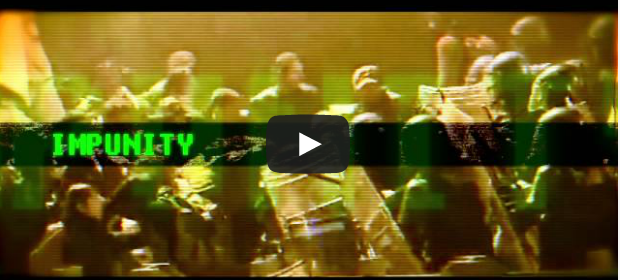
Here is the video of the campaign on the identification of the police
Current Norms on Police Identification
BELGIUM There is a generalized obligation for police officers to carry a nameplate with a name, level and police unit. This norm is not always respected and disciplinary sanctions are envisaged for those who do not wear the nameplate.
FRANCE Since the 01/01/2014 the general obligation exists to wear a white stripe with a number composed of 7 digits.
The are now sanctions envisaged for those do not wear the identification.
The recent introduction of the norm does not permit to monitor its effects.
GERMANY The Federal Police does not posses any identification number, but in the different states (Länder) legislation varies.
In most of the German Länder police officers are free to decide to wear an identification label.
In Berlin, police officers are obliged to wear a name tag or an identification number.
In Sachsen-Anhalt the general obligation exists, but the special units in charge of demonstrations are exempted from this general obligation.
HOLLAND Police officers in uniform are obliged to carry a nameplate on the uniform. During public order policing they wear a number on the helmet.
The nameplate is part of the uniform, but it is possible to hide it in certain circumstances.
There are no particular sanctions for those who do not carry an identification.
ITALY There is no norm containing a system of identification of police forcers.
A proposal exists for a law concerning the identification of police officers during their public order policing.
SPAIN There is a general obligation to wear the nameplate, except during public order policing. The law is not always abided, but no sanctions are envisaged for those who do not wear the identification.
There are significant regional differences.
On Legalteams
The EDL, in the course of a bureau meeting in Istanbul on the 18th of October 2014, has decided:
Whereas:
- In the course of a trial taking place in Turin, Italy, against dozens of citizens, who have actively demonstrated for years in defence of the territory of the Valley of Susa threatened by the construction of a devastating and useless high speed train, the Public Prosecutor has requested high penalties. During the hearing of the 14th October 2014, the lawyer defending the State affirmed:
“The so-called Legal Team was present on the scene on the 27th of June and the 3rd of July. This trial, which has lived of filmed images, has given us the possibility of seeing these lawyers in places where crimes were being enacted…the moment has come, where one has to choose between the Legal Team jacket or the Lawyers’ robe because wearing both is difficult and the credibility of the lawyer is at stake”
- Since the G8 in Genoa in 2001, in all mass demonstrations, lawyers in all Europe have worn the legal team jacket and taken to the streets in support of the free demonstration of opinion and following the principle that fundamental rights are not only defended in the courts of justice but everywhere where they are under threat.
- The grave statements of the lawyer representing the state, given the context and place where they were pronounced, constitute an unacceptable form of intimidation of defence lawyers in this particular trial, as well as of lawyers working for citizens under trial for opposing the destruction of the environment and living conditions of people.
Now, therefore:
The EDL expresses its greatest outrage at the attacks against the freedom of organization of lawyers and the attempt to intimidate the defence lawyers, undermining the guarantees of the defence within and outside the trial.
The EDL expresses its solidarity to the Legal Team Italy and to the courageous lawyers of Turin who work under particularly difficult circumstances.
The EDL reiterates that the activity of Legal Team is part of the heritage of democratic struggle and a legitimate exercise of lawyers’ professional activity.
The EDL appeals to all institutions of self-government of lawyers and magistrates, as well as to all citizens to intervene to avoid attacks on democratic lawyers and the rights of the defence.
Bureau of the EDL
Istanbul, 18/10/2014
Arrest of three Basque Lawyers
PRESS RELEASE
London, Düsseldorf, Farciennes 21 July 2014
The European Lawyers Associations AED and ELDH have received information concerning several situations of grave concern in relation with the pressure and persecution Basque lawyers are suffering.
First, we express our concern over the arrest and imprisonment of the three Basque lawyers Jon Enparantza, Arantza Zulueta and Jose Campo, arrested six months ago who still remain under preventive detention since then. The restrictive security measures to which they are subjected involve a high degree of isolation.
The cases of Arantza Zulueta and Jon Enparantza cause particular concern. In the case of Zulueta, she is suffering a situation of extreme isolation in the prison Puerto III, 980 km far away from the Basque Country, and living a lifestyle that is not compatible with her rights1. These conditions threaten her physical and mental integrity. She has not been convicted and this is incompatible with the presumption of innocence. Jon Enparantza is exactly under the same situation in the prison of Segovia, 410 km away from Donostia, where he lives with his family.
Second, we express our concern concerning the information recently leaked to the media, which could be considered to be part of an operation against a specific group of lawyers. Without having any news other than that leaked to the media, we are led to believe that the conditions described are not compatible with the exercise the right to a defence.
1
The routine she is facing at present is as follows: since entering in prison she has been in the isolation module, alone, with no contact with any other prisoner. Now she is in a special isolation module withe no human contact, she has 4 hours in the yard which measures 15 x 5 steps in the morning or in the afternoon, at the discretion of the prison officers.
She is subjected to daily personal body searches on going to the yard, and often while in the yard, her cell is turned upside down, and she can receive phone calls only when prison officers arbitrarily decide and they remain in her presence. This situation is quite irregular and contrary to the regime officially applied to prisoners.
In the cell she is only allowed to have two books and some clothes. All her belongings are retained by the authorities and even the letters received must be returned, once read, to be stored with the rest of her retained belongings. All her letters are intercepted, both incoming letters that take about two weeks to arrive, and her own letters, in addition to having the number of letters that can be sent reduced to two people, per week.
2
We therefore declare:
First. The fact that our lawyers colleagues have been arbitrarily detained must be admitted, and their right to physical and mental integrity should be safeguarded.
Second. These lawyers should be released from custody in accordance with international standards. Their release is urgent, because the lawyers are suffering a particularly severe isolation regime, away from their homes and away from their families, and the presumption of innocence to which they are entitled is being violated.
Therefore, we demand their immediate release awaiting prosecution and trial. The full and effective enjoyment of all human rights and fundamental freedom should be restored to them, in particular, those corresponding their capacity as lawyers and human rights defenders.
Third. Their prosecution before a special court (Audiencia Nacional) should be terminated, and the use of special courts for the suppression of terrorism is not justified.
Fourth. The Spanish State should instruct the Guardia Civil that police operations based only on exceptional reports such as those which have led to the detention of these three lawyers must end.
Fifth The right of full and adequate defence must be guaranteed, to be exercised freely and without any pressure or constant threats.
ELDH – European Association of Lawyers for Democracy and World Human Rights, Platanenstraße 13, 40233 Düsseldorf, Germany, www.eldh.eu
EDL – European Democratic Lawyers, Rue Albert Ier, 236, 6240 Farciennes, Belgium, https://www.aeud.org/
Aide Légale en Europe
par: Gilberto Pagani
Dans tous les textes constitutionnels et dans la Charte des droits Fondamentaux de l’Union Européenne, le droit à la justice et à l’aide juridictionnelle est consacré comme droit fondamental.
Sur le mur de toutes les salles d’audience est écrite la phrase qui devrait représenter ce principe: la loi est égale pour tous.
Ces mots ont un sens double : d’une part, les lois s’appliquent sans aucune distinction à tous les citoyens, de l’autre, tous les citoyens sont égaux devant la loi.
Mais demandons-nous: au-delà des pétitions de principe, tous les citoyens sont-ils vraiment égaux devant le procès?
Déjà dans les années ’50, le grand avocat et juriste italien Piero Calamandrei observait que
quand le pauvre s’aperçoit que, pour invoquer l’égalité de la loi à sa défense, l’aide de cette richesse qu’il n’a pas lui est indispensable, alors cette phrase, la loi est égale pour tous, semble une mauvais plaisanterie à sa misère.
Notre tradition constitutionnelle et procédurale voit le rapport entre le citoyen et la justice comme réduit aux deux figures de la justice imposante et majestueuse, et du citoyen soumis à la puissance de la loi et à la force punitive de l’Etat.
Mais c’est une vision rhétorique et contraire à la réalité, parce que le citoyen ne se défend pas tout seul (parce que d’autres règles constitutionnelles imposent l’assistance d’un avocat) et il ne pourrait pas se défendre tout seul parce que, évidemment, il ne possède pas les instruments techniques nécessaires pour affronter un procès, pas plus que le détachement indispensable par rapport aux émotions qui constellent un procès.
Alors nous pouvons dire tranquillement que la différence de traitement des citoyens devant la loi dérive de la possibilité plus ou moins grande d’avoir à son côté un bon avocat. À l’égalité de la loi, à l’égalité d’indépendance du juge, à l’égalité des systèmes, la différence est faite par l’avocat.
Le système de l’aide légale devrait être le mécanisme qui permet aux pauvres d’avoir une tutelle procédurale efficace avec un avocat de confiance.
Nous verrons au cours de nos travaux si et comment ce système fonctionne et s’il est vraiment apte à s’acquitter de son devoir.
Il est de toute façon évident que, au moment où viennent à manquer les ressources pour garantir un certain niveau de welfare, diminuent aussi les fonds pour le parrainage des pauvres.
Une des conséquences de la fin du rêve du bien-être pour tous est que sont venus à manquer les instruments de médiation sociale qui prévenaient la montée des conflits. Cela signifie que le conflit ne trouve pas de débouchés institutionnels; un nombre énorme de travailleurs dont les droits ne sont pas défendus n’ont plus aucune possibilité de se
prémunir par la voie judiciaire.
Des millions de chômeurs, de travailleurs précaires, de travailleurs étrangers et leurs familles se trouvent dans une zone de non-droit dès lors qu’ils n’ont pas, objectivement, la possibilité de faire appel à un juge, la législation néolibérale ne les défendant d’aucune manière.
Au contraire, la désagrégation sociale et le manque de structures sociales laissent ces gens isolés ou à l’intérieur de groupes sociaux restreints et marginaux et cela provoque l’augmentation de la criminalité prédatrice, des comportements déviants et, par voie de conséquence, de la prison comme instrument de contrôle social.
Nous ne pouvons penser que le renversement de cet état de choses dépende du bon fonctionnement de l’aide légale.
Mais nous devons nous engager, dans l’attente d’un avenir meilleur, pour que cette institution ne se réduise pas à un simulacre, à une simple fictio juris.
Un des sujets de ce séminaire est l’alternative pro bono ou aide légale, les droits contre la charité.
Nous tous travaillons souvent pro bono, et souvent aussi malgré nous.
Mais le pro bono des grands cabinets d’avocats n’est pas la même chose que l’activité de volontariat et de solidarité sociale qui a vu ces dernières années l’apparition d’associations d’avocats qui assistent gratuitement les gens sans logement, sans papier, les migrants, les minorités de tous types et leur fournissent gratuitement une assistance juridique de qualité.
Je rappelle l’expérience des legal teams qui, depuis Gênes 2001, engagent dans les rues et dans les salles d’audience des centaines ou peut-être des milliers d’avocats qui procurent une assistance aux gens frappés par la répression parce qu’ils manifestent pour la protection des droits fondamentaux.
Le pro bono des grands cabinets d’avocats est avant tout un “asset”, une vitrine qui permet à un cabinet qui d’habitude met ses capacités au service de spéculateurs ou de “white collar criminals” de prendre le masque de la philanthropie.
D’autre part, il faut se garder de tendances qui voudraient voir l’avocat des pas riches, l’avocat commis d’office, comme une espèce de fonctionnaire public qui rend possible par sa présence le déroulement constitutionnel d’un procès mais n’est pas une entrave à l’efficacité du système.
Du reste, il existe des idées et projets qui prévoient un fonctionnaire public comme défenseur d’office et ceci toujours avec le but de rationaliser la justice et en diminuer les coûts.
Nous devons affirmer que le droit à un procès juste est le droit avant tout à une assistance juridique de qualité; cela comporte des coûts, comme le fonctionnement des hôpitaux publics ou les logements sociaux.
Mais ce qui ne peut être mis en cause, c’est la liberté des avocats.
A cette fin, le système de l’aide légale est le seul qui se rapproche d’un accès réel à la justice.
Pour conclure je voudrais rapporter une donnée qui concerne l’Italie.
Le nombre de jeunes avocats est en diminution constante, c’est absolument un nouveau phénomène. Les avocats inscrits au barreau diminuent aussi.
Notre profession n’apparaît plus comme un métier qui permette une entrée dans le monde du travail, difficile et dure mais possible.
Les coupes dans les ressources destinées à l’aide légale, comme l’augmentation des frais de justice, frappe en particulier les jeunes avocats, qui sont les plus pénalisés par cet état de
choses.
Ces dernières années, avec les collègues de l’aed, je me suis toujours étonné des énormes différences existant entre les systèmes juridiques européens.
Nous connaissons toutes les difficultés énormes que rencontre le processus d’intégration européenne.
Les choix néolibéraux ont conduit à l’intégration monétaire totale, à la rationalisation du marché et à l’unification de l’antiterrorisme et des politiques répressives avec le mandat d’arrêt européen.
Au-delà de l’abolition partielle des frontières (Schengen), il n’apparaît pas que se soient faits de grands pas pour l’unification des droits au niveau le plus haut possible et ensuite pour une unité européenne réelle.
En particulier, il n’apparaît pas qu’il ait y eu des efforts pour rendre plus semblables les procédures, pas plus que pour rendre plus homogène le rôle des avocats.
Les seuls progrès dans ce sens sont arrivés par la jurisprudence des Cours Européennes, qui ont opéré de manière efficace et pénétrante pour obvier au manque d’intégration entre des systèmes juridiques différents, dans les limites qu’impose une législation inefficace et partielle.
Mais la défense et le développement d’un droit réel à l’accès à la justice doit être soutenu principalement par les Conseils de l’ordre et par les associations d’avocats, qui ont le devoir de conjuguer le principe du droit à l’assistance légale pour les pauvres avec le principe toutautantintangibledelalibertédel’avocat.
Gilberto Pagani
Avocat à Milan
Président d’honneur de Avocats Européens Démocrates
Trial Observation: ISTANBUL – 23rd to 26th December 2013
In Istanbul, during Christmas, as international observer in a trial starting on the 24th of December against 22 Turkish lawyers of the ÇHD group. I go, sent by EDL (European Democratic Lawyers) a European association regrouping democratic lawyers’ associations in diverse European countries, sent also by LTI (Legal Team Italy), a small group of Italian lawyers (adhering to the EDL) whose experience begun during the demonstrations in Genoa, in July 2001, and whose work has been characterized especially by being present with its members in nearly all demonstrations, in which violations of rights are conceivable, sent as well by the UCPI (Unione delle Camere Penali), the largest and most representative lawyers’ association in Italy, even if it only regroups lawyers working on criminal law.
At the trial, around a dozen foreign lawyers and journalists are present, accredited by associations similar to those who have accredited me. There is a Spanish colleague of the EDL as well, a Belgian lawyer of renowned Progressive Lawyers Network, which has called for participation to observe the trial, and other German, French, Austrian and Dutch.
THE CONTEXT:
If you want a precise and synthetic idea of the relationship between Turkish lawyers and the government, it is sufficient to visit the office of the President of the Bar Association of Istanbul, look up and ask about the hole on the ceiling. “It was a bullet from a machine gun”, says the Dean, “it was shot by a military helicopter. It missed me by a few centimetres, while I was working at my desk. An aim capable of making American drones jealous.
On a larger scale, things do not get better. There are at least 4 inquiries lately concerning a great number of lawyers. There is trial at the moment (the hearings took place mid December) against 46 Kurdish lawyers, accused of defending their clients (members of the PKK) in their own language and therefore accused of membership in the PKK themselves. The above mentioned Dean of the Bar Association of Istanbul is also confronted with a trial starting on the 7th of January, together with 12 members of his board for abuse of authority, because they did not assume disciplinary sanctions against lawyers of his Bar Association as the government pretended. The lawyers we have all seen in a video last June, as they were dragged out of the Court of Istanbul, who were arrested and detained for days, were luckier: a judged decided there was not sufficient material to take them to trial. And finally, there are the 22 lawyers of the ÇHD for whom the three hearings during Christmas are held.
To give an idea how much the Turkish government appreciates real lawyers, on the 23rd December, a Dutch lawyer was expected from Amsterdam, as international observer, but she was sent back as “persona non grata”. The reason? Back in 1999 this lawyer won a trial in front of the EHRC concerning the composition of the special court, which condemned Oçalan, and which was composed also of military. After 14 years she is still “non-grata” for having defended well her famous client and having won the European trial.
THE ÇHD AND THE ACCUSATION AGAINST 22 COLLEAGUES
The ÇHD (Progressive Lawyers Association) is an association of lawyers, not only criminal lawyers, active in the whole national territory, with headquarters in Ankara and sections all over the place. The lawyers of this group (around 2200) defend demonstrators, house squatters, people whose homes are requisitioned in favour of real state speculation, labour procedures, sometimes under the aegis of trade unions, to summarize, as is usually said, they defend “the last”, from a social point of view. They define themselves “socialist revolutionaries” and they were founded in 1974, but were banned from 1976 to 1990 by the military regime. Currently, in front of the special court in Sivrili their principal error is to have defended members of the group DHKP/C, which committed a serious of violent attacks years ago. In January 2013, the Public Prosecutor of Istanbul ordered a blitz against them and put some of them in jail, amongst them, the President of the association, Selgiuk Kozacagli, and Presidents of other sections. The accusation is of membership in a terrorist association, the DHKP/C, of which some of them have assumed the defence. Sometimes even outside Turkey. In Belgium, in the mid 2000, a trial against international terrorism took place with totally favourable results for them. During the blitz, their headquarters in Istanbul were entered and searched. The Dean of Istanbul assisted the search, for his office is in front of the ÇHD headquarters. The police destroyed computers and documents, and took away everything they found. Lawyers who were simply there were attacked and dispersed with the aid of pepper spray. Some dozen lawyers were detained in jail and released a month later[1]. 9 of them are still in custody, those who had the major responsibilities in the association.
The accusation against the 22 lawyers of the ÇHD is 625 pages long, and includes not only indications on the violations but also elements that sustain this accusation. The crimes could be defined as “membership”, “support” or “external membership” in the terrorist organization DHKP/C, crimes with the penalty of 5 to 10 years of imprisonment, in one case a colleague is pointed out as instigator (from Belgium, where she resided at the time) of two homicides, for her, they have asked for a double life sentence.
The elements of material evidence of the accusation reside fundamentally on the declarations of “secret witnesses”. The “secret witness” is a well-known figure in these trials. His declarations are put together by the police, often under torture or intimidation and then transferred into the files of the investigation. The Public Prosecutor does not know their identity and neither does it appear in the files. The defence does not know their identity and neither does the judge. In general these declarations are very long, sometimes even hundreds of pages, and totally impossible to verify. The institution of the “secret witnesses” was introduced by an anti-terrorist law (Witness Protection Law), which gives the judge the faculty of taking precautions for the protection of witnesses. Even though the secrecy of witnesses constitutes an extrema ratio, it has become ordinary praxis. It is true that no condemnation can be based exclusively on the declarations of “secret witnesses”, but they constitute the axis of the accusation, to which other elements are added. These elements are often very marginal and to the eyes of a common observer, of little significance. In this case, the membership of the lawyers in the terrorist organization is supposed to be proven, for example, by the fact that some of them have attended the funeral of their clients, victims of clashes, or because they have protested for the health conditions of their detained clients, by the fact there are photos of them together, because they opposed the entrance of police agents who had no search warrant, or by their participation in international seminaries or conferences on political or juridical themes and especially by the fact that their clients decided to use their right not to declare in front of the police, prosecutor or judge[2].
Additionally, the accusation is based on some international documents from the years 1999 and 2003, which have appeared in the trial against members of the ÇHD in Belgium around 2005. The lawyers in this trial were absolved. These documents (evidently not of special significance) have been decreed “secret” in Belgium and therefore cannot be verified by the defence, so their origin, composition and the modality of transfer from Belgium to Turkey remains unknown[3].
All this evidence of the accusation is given to us by very active members of the ÇHD in a briefing the day before the trial, in a meeting held in the Bar association. They explain not only the accusation against their colleagues but also the composition of the special court, the anti-terrorist legislation and other useful information for the trial the next day.
THE DEMONSTRATION
After a press conference, to which we have also participated as international observer and the above mentioned briefing, a demonstration took place, not only on occasion of the trial of the following day, but also to protest against the continuous intimidation and the illegal treatment the lawyers suffer. The demonstration leaves at 19h from the headquarters of the Bar Association in the centre, on Istiklal Avenue and some 2000 lawyers participate in their robes, with leaflets, banners and torches. The demonstration is opened by members of the Bar association holding a banner, reading “They will not keep us quiet”. Slogans shouted: “Shoulder to shoulder against fascism”, “We are revolutionary and we are proud”, “We will not be quiet”. Shouting them, are very young lawyers, who do not look especially “revolutionary”. We walk up Istiklal Street up to Taksim Square (the one where the Gezi Park unrests took place) but halfway the police block us. They do not attack us, so we do not have to use the strange concoction of dishwashing liquid and limestone removal some young colleagues give us against teargas and pepper spray.
There is some tension, all the area –as we later notice- is full of policemen in their anti riot gear, but the President of the Bar Association stands on the top of a light van and holds a strong speech, which is highly applauded, not only by the lawyers but also by passers-by (it is rush hour in this central shopping area). “We will not arrive to Taksim, but Taksim is here, in each one of us”, this was one of the slogans during the Gezi Park protests. The policemen are shouted “take off your helmet, no pepper spray and then we can talk”.
I think it is appropriate here to introduce a consideration on the composition of these lawyers (although it merits much more space).
In Istanbul there are some 1300 lawyers: not many for a city of 15 millions inhabitants, if compared to Italian or Spanish lawyers. Some are young, many are women. The participation to the demonstration, as well as to the trial is massive. Massive was also the defence of the Gezi Park demonstrations. These young people[4] are very prepared and very determined to claim guarantees for their clients and rights for their profession. They do not seem to care too much for the form: under the robe there is hardly ever a tie. The experience of this trial, as well as those around the protest in Gezi Park certainly constitute an endowment, to be remembered in the future[5]. It is interesting to underline the tight relationship between ÇHD, a free and private association, and the Bar Association, of institutional nature: the policy of the government concerning justice is menacing for lawyers and the bar association realizes this as well.
Afterwards, we end the day with a wonderful dinner of mezze and kebab in a good restaurant, all together, invited by the Bar association.
THE HEARINGS
The colleagues of the ÇHD (those who are not imprisoned obviously) have organized well. We leave Taksim at 8 o’clock with busses in direction of the village of Sivrili, one and half hour away from the city in the direction of Edirne. We arrive in a hilly region, controlled by the military. The first controls (on the bus) take place quarter of an hour before our arrival to the court. The court is in the periphery of a detention centre, surrounded by a barbed wire fence and watchtowers. To give an idea, take the Roman prison of Rebibbia and multiply by 20.
The building of the court is new and well devised. The controls –at least for the lawyers- are not particularly severe. It is forbidden to take photos, but it can be easily bypassed. There is a big bar and a big canteen, wonderful toilets. The court is enormous with three judges and the Public Prosecutor on the side (but at the same height). An incongruous ionic gable in plaster surrounds the court, and there are two big flags on the side and two big screens a little further up. The accused are in what we could call the stalls area, the audience facing the judges on the opposite side, and the lawyers are on small stands on the two sides. The trial starts more or less punctually with the roll call of the accused. Of the nine detainees, five are women. Then it is the turn of the lawyers: it takes a long time because the present lawyers amount to five or six hundred, each declares the bar association to which he/she belongs as well as the fact they defend “the lawyers”, playing on the fact that the accused are lawyers but that they are also defending the status of lawyers. This is possible because there is no limit in Turkey to the number of lawyers each accused can have. Around 2000 lawyers had registered as defenders of the 22 colleagues, and there are at least 500 in the court (it will not get any less crowded in the following hearings). We, international observers get called as well, together with the different associations we belong to and we are made to sit in the stalls area, behind the accused. This is a privileged position to follow the trial. The ÇHD provides us with translators from Turkish to English, French or German: there is one every two observers and they change every 20 to 30 minutes.
The indications and agreements for these first three hearings are not to loose time in preliminaries and go directly ahead to the self-defence of the accused. In fact, in Turkey the trial begins with the version of the accused. In this case it is even more relevant because they are lawyers. So the defending lawyers ask that the 600 pages of the accusation be declared read. But the courts intends to give a short summary of the long document, underlining elements as the fact the orders arrived from outside Turkey for ÇHD as well, that these lawyers worked without hardware, but only from CD or external usb keys, or that they participated in international conferences paid by the organization, that as members of the ÇHD they were also members of the outlawed PKK, that the president visited a client in hospital because of his hunger strike, that even if not all were defended for free, the organization covered the fees of some of them. Of particular importance is the fact that in the past some of them belonged to the PLO (People’s Law Office- code name: bakery) considered the legal cover of the DHKP/C, which decided whom to assist, but also with which lawyers[6]. The relationship between ÇHD and PLO is the most critical point of the strategy of the accusation and it is worth to explore this element, even if it does not relate to most accused.
After lunch, President Selgiuk starts to talk, with some 300 pages in front of him, he talks well into the next morning. Other 8 detainees continue after him, with speeches that are more or less long. It is evidently a collective self-defence with a division of tasks as to not repeat the argumentation. Selgiuk is great orator, who refers to the bastions of occidental culture (from Dostoyevsky to Shakespeare, from Babeuf to Luis Blanc and many others) trying to convey the special role of the court[7]. “Everybody remembers the name of Socrates and Galileo, but nobody remembers the name of their judges” he says very efficiently. But it is also very efficient when he reads out all striking judiciary horrors since the Ottoman times, or when he describes with lively details of tortured detainees who were buried at night, so other detainees would not see the torture and death which derived from it. Or the story of two lawyers assassinated and how their arrest was a real kidnapping. He also cites constitutional principles[8]. The most efficient point is his summary: “The prosecution asks for a penalty and needs to construct a crime. This is its tragedy. Do not let it be your tragedy. We defy you to demonstrate your independence”. The issue of the theoretical construction to legitimate the raid against the lawyers of the ÇHD and afterwards to justify their detention and trial is in essence the issue of this case, which qualifies it as a real political issue, of particular importance because centred around lawyers.
The other 8 detainees talk more or less around the same line, but each one of them describes different areas (right to work, right to housing, right to demonstrate etc) giving the precise idea that the association aimed at a more extensive aim than just occasionally defending members of a terrorist association. Even if, I must admit, it had not happened to me for the longest time, to hear so many times the concepts of “capitalism”, “colonialism”, “bourgeoisie” and all the ideological concepts that we find somehow out-dated. It does not matter, for the defence seems efficient and well founded: the demand to be able to confront the secret witnesses is made with force: the claims regarding the role of the lawyer are also forceful. “You accuse us of making 175 of our clients use the right not to respond, but the accused were 400: who made the other 225 talk?”.
The third day of the hearings, the last 9 detainees speak, then around a dozen of the 500 defenders present. These interventions are short, and ask for the liberation of the clients[9] and to fully reclaim the role of defender as an independent role, ruled by internal rules, controlled by the bar associations. “You accuse 22 colleagues of not working correctly in certain trials” argues a defender, member of a Bar Association and host of the dinners offered by the Bar, “well, I have followed the same trials in the same way they have. Why am I not amongst the accused?”
All the interventions are followed in silence and attentively not only from the audience, mainly composed of family and fans, but also by the hundreds of colleagues, some parts are underlined with applauses. The President of the court calls twice not to shout slogans, but the atmosphere is warm in relation with the detainees: they are saluted, and kissed from a far, all the colleagues present participate. You get the impression it is a very important and significant trial for the Turkish lawyers. Not only is the President of the Istanbul Bar Association present, but also the Dean of the one in Ankara, Smirne, Adana and other cities. All of them talk briefly. The Public Prosecutor takes up the word but limits himself to consenting the liberation of six of the detainees.
The court retires at 19h. It only has to decide on the liberation of the detainees, it is not empowered to reformulate or reject the accusation, on which the main hearings will deal[10].
The three days of the trial (the next hearings will take place after many months) have taken place, while outside in the media and the streets some economic scandals echoed (very Italian, you might say), as sons, parents and friends of a Minister in charge were found with their hands’ in the cookie jar while the took bribes (the television shows the machine with which they counted the amount of money of the bribes, not even Ligresti did this here!) Ten ministers have to go, and the government of Erdogan seems weakened. There are demonstrations in all big cities, as at the time of Gezi Park, asking for the resignation of the whole government. In this context of uncertainty, might a special court, based on political criteria, like the one in Sivrili, not consider it convenient to distance itself from the lame governmental duck? Or will it come at its rescue with a strict decision?
The court enters at 21h: there is tension and agitation in the audience and amongst the lawyers. Four of them are freed, and five in jail, amongst them naturally President Selgiuk: there is general disappointment and the audience shouts slogans. A partial satisfaction for the experts, and I include the international observers, because the accusation has been somehow dimensioned.
A FIRST ASSESSMENT
Naturally, and even if they put at our disposition a very relevant quantity of information, it is difficult to assess a trial you do not know. I will try to clarify some points:
- 1) We are surely dealing with a political trial, based on a theoretical construction with the political aim of levelling the defence without taking account of the complexity of the subject accused: ÇHD association.
- 2) The trial is political because it takes place in front of a special organ like the Special Court, politically designed[11].
- 3) The trial, because of the modalities of construction of the evidence (secret witness with no cross-examination, electronic documents with no expertise, declarations given under torture etc) is far from the principles of a fair trial.
- 4) This trial is turning into an important moment in the construction of an awareness of the role of the defence and of his rights, therefore of the guarantees of the citizen. Around a free and private association of lawyers, a consensus of Turkish criminal lawyers is being created; It is clear for all what is at stake in this trial and the lawyers do not intend to see themselves loose rights and functions.
- 5) Amongst Turkish criminal lawyers grows the awareness of the need to obtain a really independent judge, away from the prosecution, which although formally independent, is only an extension of the government through the police. On the other hand, the need for a trial with rules permitting the verification of the evidence presented by the accusation.
- 6) The trial, this trial especially seems to me to be halfway between old and new (even if the old prevails), as somehow happens in Turkish society as well, which is cut across by the drive towards innovation (economic and social in every direction) but is continually brought back to models and values which are old and antidemocratic, especially by the political caste.
- 7) The role in this dynamic that lawyers have and in future might have (specially the criminal lawyers is fundamental and clear, for good or for bad, and for all deployments in the field[12]).
[1] In Turkey the position of a detainee in pre-trial detention is examined monthly.
[2] Pre-trial detention is not based on a decree, the evidence can be known months afterwards. In the case of the ÇHD lawyers, arrested in January, this evidence was given in July.
[3] The most specific evidence has been given to me by the Belgian colleague Jan Fermon, at the time defence lawyer and currently international observer.
[4] You can become a lawyer after studying for 4 years and an internship of a year, 6 months with a judge and 6 months in a legal bureau, afterwards you can demand entry into the bar association, where after a screening, generally positive, you can start practising. There is no specialization.
[5] It is worth to reflect (and I think it has not been done) on the role of lawyers in the new fights to affirm democracy in the whole Mediterranean area (Tunisia, Egypt, Turkey). If now you find in the first rows a new generation of lawyers, the older ones are no cowards either. This fact is new and extremely interesting.
[6] It is true that some members of the ÇHD have collaborated with the PLO in the past for short periods, but no one has doubted the legality of the association.
[7] The court is in fact a special court, even if it is provided for in the law and designated by the Superior Council of the Judiciary. Its competence includes terrorism, organized criminality and in general crimes committed in the national territory. It is worth reminding that the Turkish High Council of Magistrates and Prosecutors, HSYK, is composed of 22 members, amongst which, and by law, the Minister of Justice, who is the president, as well as undersecretary of the same minister. Of the rest only 5 are magistrates. This council decides on the careers, appointment and dismissal of judges and prosecutors. This composition is the result of a novelty of the Erdogan goverment and since then the interference of politics in the affairs of justice is stronger than before. The composition of this special court is one of the most delicate activities of the council.
[8] In Turkey, the current Constitution is the one enacted in 1980-82 during the military regime, with successive modifications, irrelevant and not particularly progressive.
[9] None of the detainees has asked directly to be set free, because in their opinion, this would have meant the recognition of the authority of this special court, and thus the request has been made in the technical terms of the defence.
[10] The court, like it used to happen in Italy until 1989, knows all the documents of the investigation, which are put at the disposal by the accusation.
[11] See note 7.
[12] Subjective side note: the trip was a tremendous backbreaker. Even someone like me, who is skilful, especially when travelling, in the difficult art of joining business with pleasure, has had to capitulate. We wake up at 6h30 to be in Taksim by 8h and take the bus to Sivrili, which takes an hour and a half to reach the Sivrili compound. The hearing starts at 9h30 and goes on to six, seven, even nine o’clock at night, interrupted only by a sandwich in the cafeteria, and then the trip back. The only pause, useful to talk with Turkish colleagues and the other observers in a relaxed manner, is diner. Afterwards you go to bed dead tired to wake up the next morning early.
But the greatest fatigue comes, I assure you, in following a hearing during 8 or 9 hours with the interpreter murmuring in your ear. You would like to ask some questions, and try to during the pauses, and you want to take notes and elaborate them to ask more questions. In summary, killed during Christmas. I also took some significant photos I can show you if the occasion arises.