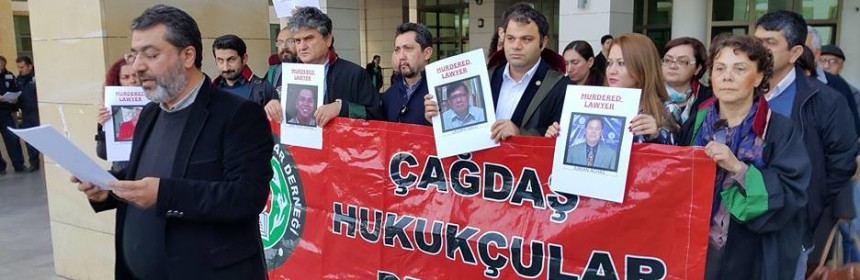

Observation Mission to Istanbul (22nd to 27th December 2013)

Issue: Anti-terrorist trial against 22 lawyers of the Turkish ÇDH association (Progressive Lawyers’ Association).

Venue: Silivri Internment Centre (1h30 away from Istanbul by bus)

Accreditation: accredited as observer by the EDL (European Democratic Lawyers) and the Bar Association of Barcelona.

INDEX

I.-        General Considerations.

II.-       The ÇHD.

III.-      The Trial.

IV.-      Preparation of the Trial

V.-       Concerning the trial and the court

VI.-      On the hearings

VII.-     Assessment and Conclusions


I.- General Considerations: The situation in Turkey is extremely difficult for lawyers, specially for Human Rights defenders, as well as for those who defend political causes. The internal political situation is very delicate due to the fight for power between different factions (Needless to say that one of the problems lies in the process of Islamization of the country). We witnessed a clear example during our trip, when the police repeatedly refused to obey the orders of the Public Prosecutor in the framework of an operation against corruption, in which members of the government where under investigation.

In Istanbul, 12 members of the council of the Lawyers’ Bar Association (amongst them, the Dean) are under trial because they refused to adopt disciplinary sanctions against lawyers defending those accused for events surrounding the demonstrations of Gezi Park, as the government and the judicial power demanded them to do.

A blatant fact, and which somehow synthesizes the situation: in the past days, the Dean of Istanbul, Umit KOCASAKAL, suffered an attack in his own office in the Bar Association, when a military helicopter shot a bullet that hit his desk. The dean preserves the bullet as proof of the event, because obviously nothing has been made known, nor has there been a serious investigation into the event. The international observers visit the office where it happened.

There are various trials against lawyers in Turkey. A few days before our observation mission, various hearings were held in the trial against 46 Kurdish lawyers accused of membership in the PKK: These lawyers have defended members of the PKK, and have tried to do so in Kurdish.

Concretely, the trial against 22 lawyers of the ÇHD is part of a large offensive against left opposition forces in the country in the framework of a rapidly progressing Islamization of Turkey. In this context, the ally of the government until now, Imam Fethullah Gülen (one of the allies of the AKP, Erdogan’s party), who oddly lives in the USA but has an enormous influence in internal politics, has begun to oppose the government’s policies.

The Islamization of society is reaching the army, which since the 20s (with Kemal ATATÜRK’s government and his Occidentalised constitution) was the guarantor of secularism in the State. This is the army, which, as they say in Turkey, attempts a coup d’état every 10 years. The last attempt ended with the trial of 200 militaries, which were judged in the same court in Silivri, in which currently the 22 lawyers of the ÇDH are under trial. All of this, in the midst of a society, which has thrown itself into wild capitalism and corruption, and the increase of Islamist charity/solidarity nets that make up for the shortages in goods and services caused by government policies. At first glance, there are enormous luxurious constructions in the outskirts of Istanbul with no access to services or urbanization of the land.


II.- The ÇHD: The 22 lawyers (9 of them have spent a year in jail in a severe regime of isolation) are members of the ÇHD. This association was founded on the 12th of March 1971. Its aim is “to develop law in the light of the historical evolution of humanity, on the basis of human emancipation and democracy, the construction of a judicial system based of social consciousness, to work to avoid any attack on fundamental rights, the right to life and dignity”. The ÇHD has 12 territorial sections and around 2500 registered members. Its areas of work are: the defence of workers’ trade unions, of workers criminalized for reclaiming their loan, of students excluded from educational centres, of political activists assassinated or mutilated because of a lost bullet of the police, as well as the defence of the families of these victims, of the victims of torture in the street or under detention, of the oppressed Kurdish people, of Kurdish politicians, and of Kurdish lawyers who cannot work. The ÇHD also follows environmental trials, like the HES projects (hydroelectric power), or the trials against enterprises of gold extraction with the aid of cyanide, the principal enterprises of cement and nuclear energy, and the defence of those who live in marginalized neighbourhoods and who end in the street because of so called urban development, the defence of victims of honour crimes and sexual abuses. The ÇHD further follows the trial against de Hrant Dink, an Armenian journalist who was assassinated six years ago (the responsible are free), they defend religious and ethnic minorities, socialists, revolutionaries and democrats, as well as those who have a different ideology and suffer oppression because of their opposition to the dominating system.


III.- The trial: The police, in the course of an operation ordered by the Public Prosecutor, entered and searched in the early hours of the 18th of January 2013 more the 15 law offices and homes, as well as the offices of the ÇHD in Ankara and in Istanbul. Finally, the following lawyers were detained: Selçuk KOZAGACLI, President of the ÇHD, Oya ASLAN, Zeki RÜZGAR, Taylan TANAY, President of the ÇHD in Istanbul, Güclü SEVIMLI, Guraya DAG, Gulvin AYDIN​​, Serhan ARIKANOGLU, Efkan BOLAC, Ebru TIMTIK, Barkin TIMTIK, Naciye DEMIR, Günay DAG, Sukriye ERDEN, Vangolu KOZAGACLI and Özgür YILMAZ. At the time of the operation, the President of ÇHD Selçuk KOZAGAÇLI was in Syria. When he found out what was happening, he voluntary came back on the 01/21/13 and was detained while still on the plane.

They were accused of membership in the DHKP/C organization (Front for the Liberation of the Revolutionary People), of profiting from the privileges of lawyers, as well as of training terrorists in their offices. The judicial investigation was closed on the 18th of July 2013. The 22 lawyers risk high prison sentences, as an example:

– Ebru TIMTIK, life sentence

– Selcuk KOZAGACLI, from 16 and 23,5 years of prison

– Taylan Tanay , from 21,5 to 42 years of prison .

The Turkish bar association has publicly protested against this trial.

The accusation of the Public Prosecutor is full of references to the professional work of the lawyers and they are identified with their clients and the activities of these. The lawyers were accused of “defending a great number of members of the DHKP/C organization“. The Security Division has tried to prove these allegations on the basis of statistics. As an example, and according to police sources, between 2010 and 2012, 288 of the 470 persons detained for belonging to the DHKP/C, were defended by the People’s Legal Office (HHB). All of them made use of their existing fundamental right not to declare in police headquarters.

The publication of articles by these lawyers in several legal journals is considered evidence of their membership in the organization (diverse articles and information on Selçuk Kozağaçlı were published in two diaries of the DHKP/C association and in other media).

In the context of this judicial logic, the accusation identifies perfectly legitimate activities of these lawyers with actions of terrorist character. This identification/assimilation is prohibited under article 18 of the Basic Principles of 07/09/90 adopted by the 8th Congress of the United Nations on the Prevention of Crime and the Treatment of Offenders in La Habana: “Lawyers will not be identified with their clients or their clients’ causes as a result of their professional work”.

The politics of the government and the intoxication of public opinion violate the presumption of innocence. The police in Istanbul have released information on the private sphere of the lawyers detained.

The accusation is based on documents –mostly electronic- given to the Turkish authorities by the Belgian judicial authorities, and their exact origin or address is unknown. They were written in 1999 and 2003 and are called “the Dutch and Belgian documents”: These documents were sent to Turkey on the 5th of February of 2007. Nevertheless, no inquiry was opened against the People’s Legal Office (HDD) until 2012, after having this information for 6 years. The author of these writings is unknown and code names are used, which are deciphered without reference to the system applied. Obviously such ambiguous material evidence, produced in the trial in an irregular way cannot be taken into account by legal judges.

The searches were also irregular, because the 130th section of the Law of Criminal Procedure (CMK) requires a “court” for the entry into law offices. This particular disposition is also contained in the code of Turkish lawyers. The search warrants were unclear and imprecise without indication of the allegedly accused person. The house searches were carried out without the presence of a lawyer, Public Prosecutor, or Dean of the lawyers’ bar association present. The presence of the Dean in these house searches is mandatory. Equally, during the house search in the ÇHD offices, the Dean of Istanbul was denied entry.

The access to the file has not been permitted neither to the defence nor the accused until the end on the inquiries. Art. 153.2 of the Law of Criminal Procedure permits the restriction of the rights of the defence and in particular to access certain elements of the declaration, but only in cases were an absolute need of the investigation justifies it.

In jail, there are cameras installed in the cells filming 24h a day. The lawyers are under a regime of isolation. The men are in high security prisons, while the women are in “normal” jails.

The situation being as it is, it is to be clearly stated that the regime in jail, the investigation, as well as the accusation violate basic principles of the defence and preclude a fair trial.


  1. – Preparation of the Trial:
  2. The trial is held in the 23rd section of the High Criminal Court of Silivri (Criminal Court Campus) against 22 members of the ÇAĞDAŞ HUKUKÇULAR DERNEĞI (ÇHD): Selçuk KOZAĞAÇLI, Taylan TANAY, Barker TİMTİK, Ebru TİMTİK, Oya ASLAN, Günay DAG, Naciye DEMIR, Şükrüye ERDEN, Nazanin BETULIA, Vangölü KOZAĞAÇLI, Özgür YILMAZ, Avni Güçlü SEVİMLİ, Guraya DAG, Gülvin AYDIN​​, Efkan BOLAÇ, Serhan ARIKANOĞLU, Zeki RÜZGAR, Mumin Özgür GİDER, Metin NARIÑO, Sevgi SONMEZ, Alper Tunga SARALA, Rahim YILMAZ and Selda YILMAZ.
  3. Foreign Observers: present are a German lawyer (Thomas Schmidt) of the ELDH, 2 lawyers (Dúndar Gürses and Hans Langenberg) of the Dutch association Lawyers for Lawyers, a Belgian lawyer (Jan Fermon) secretary of the AIJD, an Italian lawyer (Ezio Menzione) of the EDL (European Democratic Lawyers), Legalteam Italia and Vicepresident of the UCPI (Unione Camere Penali Italiane), a French colleague member of the council of the Bar association of Paris (Carbon de Sèze) and other lawyers from Germany and Austria in personal capacity.

C.- Briefing in the Bar Association in Istanbul: The 23rd of December, the lawyers involved in the trial provide us with a technical explanation on the trial and on Turkish anti-terrorist law. The Turkish law of 1991 gives a very abstract definition of terrorism, in which glorification of terrorism is included and that remits to General Criminal Law when the action contended is not contained.

The court (3 magistrates) constitutes a special/exceptional jurisdiction and is the heir of the State Security Court (2 judges and a military judge).

The elements of evidence of the accusation can be defined as highly irregular:

1.- Secret witnesses (who have no basis in Turkish law), and can only be verified by the court. They have declared in other courts without any defence present and they will not declare in the hearings. Thus, the defence has not been able to question them under the principles of immediacy and contradiction. This evidence is crucial.

2.- Included in the accusation are documents sent by mail from Belgium (the Dutch and Belgian documents), dated back to 1999 and 2003, without any mention of source or reception and the treatment they have received after 6 years in the hands of the police. The originals are not available. These documents served as evidence in another trial in Belgium, where part of the accused were absolved of membership in a terrorist organization (ne bis in idem). According to the accusation the names of the accused appear in code. The system used to decipher them is unknown.

D.- Before the briefing, a press conference is held in the Bar association of Istanbul with a very active participation of the Dean. Afterwards, a demonstration takes place with hundreds of lawyers in robes, which is blocked by a disproportionate police presence long before arriving to its formal destiny, Taksim Square. The Dean of Istanbul, who participates together with members of the council, holds a very enraged speech concerning the role of lawyers in defence of liberties from the top of a car in the middle of the street and in front of the Police, accusing them of defending fascism.


  1. – On the trial and the court:

The judges are seated under enormous golden letters: JUSTICE IS THE BASIS OF THE STATE (Adalet Mülkün Temelidir). This is a specially authorized court (Özel Yetkili Mahkeme). The president of the trial seems especially appeasing from the outset and the fear arises that this might be but an interested way of acting, because the executive has already written the sentence beforehand.

One of the elements creating debate and complaint, for it represents an attack to the division of powers, is the form, in which the members of the court are chosen in this type of trial. They are chosen by the High Council of Judges and Prosecutors (HSYK), which is composed by 22 members: the Minister of Justice (President), a member of the Secretariat of the Minister of Justice, 10 Judges of the first stage of proceedings, 3 Judges of the Appeal courts, 2 members of the State Council, a member of the Academy of Justice of Turkey, and finally 4 jurists or lawyers chosen by the President of Republic.

The gravest accusations are those of assassination of policemen, injuries and membership in a terrorist group (also outside Turkey). One of the evidence is based on the fact that the accused appear under code names in the Dutch and Belgian documents of 1999 and 2003. These have been deciphered without us knowing by whom or how, but they are the basis of the accusation of being the political arm of the DHKP/C organization.

The idea of the accusation is simple: to transform into solid facts a multitude of small facts, insignificant and without any connexion or incrimination. The fact of attending demonstrations, to chant in them constitutes an incriminatory fact. Attending the funeral of their clients, accused of membership in terrorist organizations is supposedly an incriminatory fact. Other evidence is based in the entrance and search of the law offices, where allegedly a poem was found, which talked about lawyers and terrorists. The fact of assisting their clients to make use of their right not to declare (this right is recognized by Turkish law) in front of the police is further considered suspicious. In the accusation, one of the suspicious facts committed by the President of the ÇHD is described as: proposing a strategy in the terrorist organization because of declarations as: “Torturing an injured person is illegal, independently of the accusation. We follow these events with attention”. According to the accusation to say that “torture is a crime” is an act that proves membership in a terrorist organization.

It is not allowed to film or record in the Court.


VI.- On the hearings:

On the 24th: all the accused are present. The special courtroom is of enormous dimensions and can contain more the 500 defence lawyers on both sides (in Turkey there is no limit to the number of defence lawyers for each accused). With the help of a microphone, which turns in the room, all the defence lawyers introduce themselves quickly to the court (this operation alone takes 1h30). The court and the public prosecutor are in the highest position in the courtroom. The international observers are made to stay – after consulting the court- together with their translators in the space of the public and therefore prevent the presence of the audience in the small place dedicated to it (150 persons). The area for the accused can contain up to 200 persons (some months before, some 200 militaries were judged for an alleged coup d’état – the Ergenekon case). During the first pause, the Court permits international observers to place themselves in the middle of the room, behind the accused. Even so, they are far away. There are also various observers from different Turkish bar association.

The accused renounce to the reading of the accusation (625 pages). In spite of this, the court proceeds to read a summary of the accusation, which it has written up itself. This act gives the impression of partiality of the court and could have contaminated it. Finally, the President, declares that the fact the accusation has not been read in its entirety will not be considered a reason for appeal and that the parliament is already legislating in that sense. All the accused have asked their lawyers for a political and not a technical defence. Subsequently, the first accused Selçuk KOZAGAÇLI takes his turn to speak. His defence statement is 10 hours along and continues the next day. It is a heated discourse against misery, death, impunity and capitalism. He denounces the social situation in Turkey and the prosecution of dissidence, the attacks against lawyers because of the impossibility of detaining all his clients. He does not recognize the legitimacy of the courts, but at the same time he directs his speech at it. He affirms the right to revolt when the State attacks or does not defend its citizens, because the Constitution itself affirms the Right to Resist. He denounces the State crimes and includes his detention and kidnapping. He considers he is paying a high price for his professional and political activity. He expresses his interest in class war and not in official history. He accuses Justice for giving up and letting itself be humiliated by the State (especially in the Kurdish case). His speech makes constant reference to European intellectuals and politicians (the Antigone myth, Mark Roberts, Louis Blanc, Heidegger, Hegel, etc.).

After him, during the second and third day of hearings, the rest of the detained take their turn to speak. The speeches, less dense and extensive, continue with the denunciation of the situation of the disadvantaged and the illegality of the trial. They relate the case of a political prisoner tortured in the prison of Ankara, whose parents were not able to recognize due of the state of the corpse. Since the AKP (the Erdogan party) is in power more than 2000 people have died in jail. When the police kill somebody in the street, they extract the bullets of the corpse in public. They denounce the grave and lethal absence of security in the work of minors.

Once the defence statements are finished, at the end of the third day, the lawyers of the defence take their turn to speak. Around 15 of them intervene for around 15 minutes. Amongst these interventions, it is worth noting for its symbolic value, the intervention of the Deans of the different bar associations.

– End of the hearings: The three days of hearings conclude on the 26th of December at around 20h00. The court retires and around two hours later, they announce their decision to liberate four of the accused. The foreign lawyers comment that the trial might be taking another orientation and that the gravest accusations might start to loose entity.


VII.- Assessment and Conclusions:

Currently, Erdogan’s government suffers from important political instability and there are incidents in all big cities.

The absence of division of powers in Turkey is clear. The judiciary responds regularly and naturally to the decisions of the executive.

The police act with total impunity and corruption is a fact of the every day life of the Turkish people.

The internal institutional tension makes the social and political situation highly conflictive.

Days before, and because of protest against this trial and another one against 40 lawyers, those who demanded the liberation of their colleagues where evacuated of the enormous Palace of Justice in Istanbul with the help of teargas.

Currently, one of the most important points in the international agenda of the Turkish government is its (economic) intervention in the defence of jihadists fighting in Syria. The accused lawyers have all actively participated in denouncing this policy, together with the associations they integrate or defend. The three days of hearings (and other hearings, which will be held in the next months) are held with an enormous security device outside and inside the courtroom. In spite of this police presence, the foreign observers did not suffer any anomalous or in any way difficult situation. We were identified on the first day, and afterwards were free to move (we did not even have to pass the metal control).

Some important points:

1) Doubtless, this is a political trial based on the political aim of neutralizing Human Rights defenders. They are acting at the same time directly against the ÇHD for its socialist views, as well as for defending armed groups. The accusation includes declaration of secret witnesses and other people, who declared between 2011 and 2012. At the time, some of these witnesses presented a complaint against the General Direction of the Police in Istanbul for organizing a conspiracy. It is known that some of these secret witnesses have said, in the presence of a judge, that in the General Direction of the Police they were made to sign their confession under pressure, even if this point is still not clear. All of this is not included in the accusation.

2) The trial is also political because it takes place in front of an exceptional body, like the Specially Authorized Court, which is politically put together.

3) The trial is completely irregular in all that concerns the construction of material evidence: “secret texts”, which are not discussed in the courtroom, electronic documents, which are not available for an expert opinion, declarations obtained under torture, secret witnesses, who do not declare in trial etc. The confidentiality of the lawyer-client relationship has been violated with the use of methods of illegal investigation methods as phone tapping and secret witnesses. Eight months after the detentions, which took place on the 21st of January 2013, the Office of the PM in Istanbul opened the case by copying the police file. This contained a lot of rumours and distorted information. The material evidence has been mainly obtained through illegal methods. The construction of the trial in its totality is far from the principles of the criminal trial as it is described in art. 6 ECHD (Turkey is member of the Council of Europe since 1949).
5) It is considered necessary to obtain an independent court, especially from the accusation, for despite its formal independence, it is in reality an extension of the government and the police. The other underlying idea is that it is necessary to create certain rules to be able to verify in court the evidence presented by the public accusation. Furthermore, the way of choosing the naturally competent court is totally perverted by the intervention of the executive (the High Council of Judges an PM – HSYK) in this process.

6) The trial reflects Turkish society, with a great drive towards economic and social innovation, but continuously impregnated by oligarchies and undemocratic models and values.

7) The criminalization of lawyers: as evidence, the accusation provides graphics relating to the political tendencies of the clients of the lawyers. Furthermore, they use statistics concerning the number of clients who used their fundamental right not to declare. The accusation is based on the fact, not sustained by material evidence, that there exists an organic relationship between the People’s Legal Office (HHB) and the DHKP/C. They consider that the HHB is a under unity of the organization in the legal area, and therefore the accused lawyers would be part of the organization.
8) The investigation is characterized by numerous illegalities: in this trial there have been unjustified and grave restrictions of the right to a defence (in violation of art. 6 of the ECHR.


9) The degrading and inhuman treatment of these lawyers during police detention. In addition, the police took saliva samples of the accused as well as a blood sample from the colleague Selçuk KOZAĞAÇLI without reason, the accusation had not asked for them and it is currently unknown for which crimes it might serve as evidence (violation of art. 5 of ECHR).

10) It can be affirmed according to the this trial observation, that since the start of the trial there have been systematic violations of the right to the presumption of innocence and that the work of the lawyers accused has been illegally criminalized on the one hand because of the intromission of the executive power in the judiciary and on the other hand, because of the impunity with which the Turkish security forces act.

Barcelona, ​​27th of January 2014.

Robert Sabata i Gripekoven

lawyer

annex:

– list of the accused with specification of the crimes they are accused of and of the corresponding articles of the Turkish criminal code (in English).

Note: the trip was hard and exhausting. The hearings are never ending in a context, which is dense in all senses, and it is very difficult to understand the simultaneous translations (murmured in the ear) in spite of the good work of the translators.

TO THE SPANISH AUTHORITIES

PETITION
WITH URGENT REQUESTS TO THE SPANISH AUTHORITIES
PRESIDENT OF THE GOVERNMENT OF SPAIN, MR. MARIANO RAJOY BREY AND ALL MEMBERS OF THE SPANISH GOVERNMENT

3rd day of the Endangered Lawyers – 24th January 2013
European lawyers demand: Basque lawyers in Spain must enjoy the free exercise of their professional duties

During the last two decades more than 20 Basque lawyers in Spain have been kept in pre-trial detention, several of them up to almost 2 years. All the arrested lawyers were charged with terrorist crimes connected with ETA, or with insulting the Spanish state. All of them were either defence lawyers or human rights lawyers representing alleged members or supporters of ETA organisations. Later it turned out that most of these arrests were unfounded and unlawful. In almost all of the above mentioned cases the suspected lawyers were acquitted afterwards, or the cases were dismissed.

By arresting these lawyers the Spanish state not only prevented them from exercising their professional duties but also denied their clients the right to be represented by a lawyer of their choice. Both acts were a violation of human rights, under the European Convention of Human Rights Art. 6, Para 2, c and the UN Basic Principles on the Role of Lawyers, 1. ” All persons are entitled to call upon the assistance of a lawyer of their choice”, 18. “Lawyers shall not be identified with their clients or their clients’ causes as a result of discharging their functions.”

The organisations signing below have been informed that Basque lawyers, in politically sensitive cases were identified with their clients. In several cases where they had clients who were accused of ETA activities, the lawyers themselves were persecuted, arrested, detained and put under high pressure. Arrested lawyers were even detained incommunicado and could not even be advised and assisted by a lawyer of their own choice, on the days immediately after their arrest.

Spain is one of the countries where lawyers appear to be threatened because of the fact that some police officers, some media and even juridical authorities suggest that lawyers have to be persecuted in the same way as their clients. This is not only against the law and a threat to the Rule of Law, but it also creates the high risk that even lawyers falsely suspected of supporting ETA as well as real supporters are prevented from having a fair trial.

Therefore the organisations signing below ask that you pay close attention to these abovementioned violations of the rights of the defence – as guaranteed in many international and European Treaties (International Covenant on Civil and Political Rights, European Convention for the Protection of Human Rights and Fundamental Freedoms, Charter of Fundamental Rights of the European Union) ratified by Spain -, which are also a grave violation of the UN Principles on the Role of Lawyers, as adopted in Havana. AED and ELDH want to express their concern about the fact that these persecutions of lawyers which are continuing for many years have a structural character. We demand

1. The full implementation of all International and all European law ratified by Spain concerning the right to a fair trial, i.e. Art. 14 International Covenant on Civil and Political Rights, Art. 6 European Convention on Human Rights.

2. The full implementation of the Basic Principles on the Role of Lawyers i.e. Art. 7, 8, 16, 18

  •  That all persons arrested or detained, with or without criminal charge, shall have prompt access to a lawyer, and in any case not later than forty-eight hours from the time of arrest or detention.
  •  All arrested, detained or imprisoned persons shall be provided with adequate opportunities, time and facilities to be visited by and to communicate and consult with a lawyer, without delay, interception or censorship and in full confidentiality. Such consultations may be within sight, but not within the hearing, of law enforcement officials.
  •  That lawyers shall not be identified with their clients or their clients’ causes as a result of discharging their functions.
  •  The Spanish State shall ensure that lawyers ( a ) are able to perform all of their professional functions without intimidation, hindrance, harassment or improper interference; ( b ) are able to travel and to consult with their clients freely both within their own country and abroad; and ( c ) shall not suffer, or be threatened with, prosecution or administrative, economic or other sanctions for any action taken in accordance with recognized professional duties, standards and ethics.
  1. Full implementation of the conclusions in the reports of the European Committee for the Prevention of Torture and the UN Special rapporteurs.
  2. To abolish the use of incommunicado detention, cf. Art. 3 ECHR
  3. To stop the disproportionate use of pre-trial detention and pre-trial detention without a full

    consideration of whether detention is proportionate.

  4. To end the practice of secret legal proceedings, which severely restrict access to the details of

    the case, including the charges and evidence in the case until up to 10 days before the closing of the investigative phase. For example :refusal to explain the charges against the arrested and refusal to hand over the files)

  5. An independent commission to investigate the violation of the rights of lawyers in Spain, in particular of those who have been or are still are ,or will be kept in detention.
  6. The release of all lawyers whose detention is found unjustified by this commission and a compensation for human rights violations which they have suffered.

Prof. Bill Bowring, barrister, President of ELDH, London (UK)

www.eldh.eu

Mr. Frédéric Ureel, advocate, President of AED-EDL, Farciennes (Belgium)

www.aed-edl.net

FOR MORE INFORMATION :

  • Mr. Hans Gaasbeek, advocate, Vice President of AED, Haarlem, Netherlands, Phone 0031 6 52055043, hgaasbeek@gaasbeekengaasbeek.nl
  •  Mr. Thomas Schmidt, advocate, ELDH Secretary General, Düsseldorf, Germany, Phone 0049 211 444001, thomas.schmidt@eldh.eu


    Note–The Day of the Endangered Lawyer is a project, launched in 2010 by the commission defence de la defence of the AED/EDL (European democratic lawyer confederation). The goal is to direct once in a year international attention towards the worldwide harassments, persecutions killings and threatening of lawyers, while performing their professional duties. Since 2012 this is a joint project of AED and ELDH. Other Lawyers and Human Rights organisations are welcome to join.

Great success of the day of the endangered lawyer

On the 24th of January, hundreds of lawyers demonstrated in front of Turkish embassies and consulates all over Europe to protest against the attacks suffered by Turkish lawyers.

Around fifty lawyers were arrested in Turkey in November 2011. They were accused of complicity with their clients who are part of the KCK network (Turkish civil society) and are accused of terrorism. Thirty six lawyers are still in prison.

Three lawyer- and jurist-associations in Europe – European Democratic Lawyers, European Association of Lawyers for Democracy and World Human Rights, and the Human Rights Institute of European Lawyers- have organized this protest on the anniversary of the assassination on the 24t h of January 1977 of lawyers in Madrid.

The rallies of lawyers in their professional gowns took place in front of Turkish embassies and consulates in La Hague, Amsterdam, Brussels, Paris, Rome, Milan, Berlin, Hamburg, Düsseldorf, Madrid, Barcelona, Bern and Athens. Lawyers gathered in Athens were questioned by the police for some hours.

The three associations have addressed to the Turkish authorities, through its diplomatic representations, a demand to repeal the current anti-terrorist legislation, a legislation which is contrary to Human Rights and Civil Liberties. Moreover, the lawyers demanded the Turkish authorities to stop the attacks and intimidation of lawyers and to authorize the presence of legal observers in political trials.

27th of January 2012

THE VIOLENCE IN BOLZANETO IS CONFIRMED

THE VIOLENCE IN BOLZANETO IS CONFIRMED

WE HAVE TRUTH BUT NO JUSTICE

Seven years after the events and four years after the beginning of the trial, the Court of Genoa has only partially done justice to the victims of the Bolzaneto lager.

The gravest violations of fundamental rights have been confirmed like the inhuman treatment of the detained and the violence. The officers responsible of the structure have all been condemned. We wait to know the motivations of the sentence to evaluate some parts that seem inexplicable at the moment like absolving some of the accused for facts that seem confirmed, particularly the crimes of falsehood) and the mildness of some of the convictions in the sentence. The absence of a law that punishes torture and the reigning conspiracy of silence amongst those that belong to the Forces of Order has prevented a harder sentence, more in accordance with the seriousness of the ascertained facts.

We retain as positive the fact that the truth has been confirmed, that is, what was denounced and related by the victims of Bolzaneto. We also retain as positive the only part of the condemnation that is not symbolic: a compensation for the damages in the form of a payment of 10.000 euros for those who have suffered the violence and for their families. The conviction to compensate the damages has included the Interior Ministry and the Ministry of Justice, proving the full responsibility of the State in the ascertained facts. Due to the prescription of the crimes and the application of the Italian law regulating indult, the compensation of damages is the only tangible effect of this trial, which will not compensate the suffering of the victims and the permanent consequences of the physical and psychological violence.

The determining fact has been the contribution of the lawyers of the plaintiffs who from the start where alone in gathering the complaints, demanding investigations and pushing the public powers to start this trial. Other than the many Italian lawyers, numerous lawyers from Europe have been directly present at the trial and have given useful contributions. Many of these lawyers are part of the European Democratic Lawyers’ Association (EDL).

Now that through public debate the events that took place in Bolzaneto have been ascertained, events that are unworthy of democratic state, we ask the government to apologize to the victims of Bolzaneto, takes measures against the condemned officers and proceed immediately to the payment of the due sums.

15/7/2008
EUROPEAN DEMOCRATIC LAWYERS www.aed-edl.net
LEGAL TEAM ITALIA www.legalteamitalia.it

Lawyers in the Philippines

Malaga, 27th January 2007

The European Democratic Lawyers have been informed of the dramatic situation of lawyers and judges in the Philippines during their General Assembly in Malaga on Saturday, the 27th of January 2007.

Since the year 2001, 17 lawyers and 11 judges have been murdered. Most of them were engaged in the fight for the respect of Human Rights. Today, many other live under threat.

The EDL demand of the government of the Philippines and of national and international institutions to:

1. Publicly condemn the murders and threats in resolute terms.

2. Take action immediately to protect the security of lawyers, judges and all those engaged in support of Human Rights.

3. The demanded measures imply pursuing the presumed authors, even if the forces of state security were involved

4. Constitute and give support to an independent commission, not controlled by the government, in charge of investigating the murders, threats and harassments. The recommendations of this commission should be followed.

5. Take all necessary measures to end the culture of impunity and to restore the confidence of the people in the functioning of a constitutional state and the rule of law.

TO THE CONSEJO GENERAL DE LA ABOGACÍA ESPAÑOLA

TO THE CONSEJO GENERAL DE LA ABOGACÍA ESPAÑOLA (GENERAL COUNCIL OF SPANISH LAWYERS)

The international Association of which I am president, the European Democratic Lawyers (AED) has had knowledge of serious procedural incidents during the oral hearings being held at the 3rd Section of the Audiencia Nacional (Case 18/98), through several of our members who have attended these hearings as accredited observers. Therefore, at the General Assembly held on January 20th in Brussels, the Association agreed to address this Council in order to state the following:

First. – Since the beginning of the Trial, several lawyers from our Association have regularly attended the oral hearings as juridical observers with due authorisation from the Tribunal. The incidents explained below were directly witnessed by the said observers.

Second. – One of the preliminary objections made by the defence counsel for the 58 defendants at the beginning of the oral hearings, referred to the fact that a large number of pieces of documentary evidence requested and approved by the Tribunal as anticipated evidence were not included in the Case files. The observers were able to verify, according to the account of evidence proposed and admitted and its state provided by the Secretary, that the said pieces of evidence had not been incorporated into the proceedings. Likewise, the defence requested the Secretary gave an account of the pieces of evidence which were at the disposal of the Court at that time, and that they be located among the proceedings, totalling in excess of 200,000 sheets. This request was disregarded.

The preliminary objection demanding the hearings be adjourned until all the agreed preliminary pieces of evidence were incorporated into the proceedings and made available to all the parties was rejected by the Tribunal, which agreed to resume the sessions.

Third. – During the session of December 20th, 2005, one of the requested and admitted preliminary pieces of evidence was incorporated into the proceedings. This piece was a set of older proceedings from Central Investigation Court No5, which were opened in 1989, and to which the prosecutions, booth the Prosecutor Fiscal and the private prosecution (Asociación de Víctimas del Terrorismo) had referred to as evidence. It was therefore clear that they were aware of the content of these proceedings.

The said piece of evidence amounts to approximately 100,000 sheets of paper.

Despite the fact that it had been added to the proceedings, the said piece of evidence was not made available to the counsel for the defence immediately. The reason given for this was that the Tribunal had to examine its content and organise it first.

Fourth. – More than one month later, the lawyers for the defence had not been given a copy of the said documents, and they had only been allowed to consult this material at the Secretary’s office within a very limited timetable. The defence therefore requested the Trial be adjourned for the time necessary to at least minimally appraise the content of such a voluminous piece of documentary evidence.

When this request was denied again, the lawyers for the defence called for backing from their respective Professional Bar Associations, which in turn addressed the Basque Lawyers’ Council. The latter issued a resolution that was very critical of the decision by the Court. We know that the Madrid Bar Association has also expressed itself in a similar vein.

Fifth. – As a consequence of the calls for backing, the Court issued a decision adjourning the Trial until January the 30th, 2006, which evidently still allows too little time to assess the piece of documentary evidence described above with full guarantees.

In view of all the above, the Association of which I am president has agreed to call on this General Council to make whichever decisions and initiate whichever actions it sees fit, in order to prevent new violations of the right to a defence in Case 18/98, and to express its support for the measures requested by the defence lawyers, aimed at safeguarding this right; including, insofar as it is necessary, an adjournment of the Trial until such a time as it can be resumed in accordance with juridically acceptable guarantees.

Brussels, January 21, 2006.

August Gil Matamala President of the AED.
Rambla de Catalunya 10, 2o 2a 08007 Barcelona